

Buddha teachings : ค้นหาหนังสือธรรมะ หน้า 11 / 28
หน้าหนังสือทั้งหมด
95
Stories of Enlightenment and Wisdom
The Story of Prince Abhaya
The Story of Monk Sammunithera
The Story of Monk Anulamitra
The Story of Venerable Gela
The Story of Thirty Gela
The Story of Cinnamana Vyasa
The Story of Ananda
The Story o
This compilation presents various stories, including the profound narratives of Prince Abhaya, Monk Sammunithera, and the key teachings of the Buddha related to temptation and enlightenment. Each stor
24
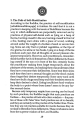
The Path of Self-Mortification in Buddhism
2. The Path of Self-Mortification
According to the Buddha, the practice of self-mortification [attakilamathānuyoga] is fruitless. He said that it is not a practice in keeping with the tenets of Buddhi
In Buddhism, the practice of self-mortification is deemed fruitless by the Buddha. He elucidates that these practices, such as lying on thorns and severe fasting, do not genuinely rid individuals of d
41
The Noble Middle Way in Buddhism
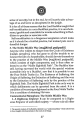
sense of security, but in the end, he will surely take advantage of us and leave us decapitated in the jungle.
It is for all of these reasons that the Lord Buddha taught that self-mortification is a n
The text discusses self-mortification as a non-Buddhist and dangerous practice, as taught by the Buddha. It emphasizes the importance of the Noble Middle Way, or the Eightfold Path, as the means to un
55
Understanding the Noble Truth of the Cessation of Suffering
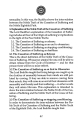
sensuality. In this way, the Buddha shows the inter-relation between the Noble Truth of the Cessation of Suffering and the Noble Eightfold Path.
3. Explanation of the Noble Truth of the Cessation of S
This text delves into the Noble Truth of the Cessation of Suffering as per the teachings of the Buddha. It defines the Cessation of Suffering in four aspects - as release from the cycle of existence,
155
King Asoka: Patron of Buddhism
by inviting 60,000 monks for alms in the palace daily. The king wanted to have the chance to pay respect to a fully-enlightened Buddha and with this end in mind, invited the Naga King to come up from
King Asoka was a pivotal figure in Buddhism, inviting 60,000 monks for daily alms and yearning to pay respect to a fully-enlightened Buddha. He invited the Naga King to appear as the Buddha for homage
198
Adapting Teaching Practices Through the Middle Way
how to adapt the teaching for our personal practice. How-ever, if we look at how Luang Phaw Wat Paknam explained these same words, compiled from sermons he gave on many occasions:
SECTION 2: THE MIDDL
In this exploration of the Middle Way as explained by Luang Phaw Wat Paknam, we learn about its significance in achieving insight and reality perception. The Buddha emphasizes the importance of the 'i
244
Understanding Buddhist Concepts: Nirvana and Absorptions
nevasāññāṇasāññāyatana (absorption of neither-perception-nor-non-perception: see formless absorptions) Nevasāññāsaññāyatanaabhūmi (realm of neither-perception- nor-non-perception: see formless Brahma
This text delves into various Buddhist concepts such as Nevasāññāṇasāññāyatana, the realm of neither-perception-nor-non-perception, Nibbāna, and other related terms. It discusses the Five Aggregates,
9
Relationships and Love in Buddhism
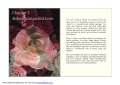
Chapter 2
Relationships and Love
People spend a fortune on research, books and
other sources of information trying to discover the
'secret' to a successful and lasting marriage. Yet,
every year statis
In this chapter, we delve into the challenges of modern marriages and the rising divorce rates that impact society. Despite numerous resources available, the quest for a lasting marriage often leads t
195
Understanding the Three Characteristics of Buddhism
Characteristics (tilakkhana), consisting of impermanence
(aniccata), suffering (dukkhata), and non-self (anattata). This
truth stands behind all living beings in this world.
The truths of the Law of K
This text explores the Three Characteristics of Buddhism—impermanence, suffering, and non-self. It discusses how misconceptions among children regarding Buddhist teachings and monks can hinder their u
12
The Purpose of Dhammakaya Temple
this mode of thought mankind creates many different types
of research. And, to our great disappointment, most fail to
have lasting success.
The Dhammakaya Temple was established with the
aim to make i
The Dhammakaya Temple aims to develop its members into good people through understanding the Dhamma. It has expanded globally, with an increasing number of visitors practicing to eliminate suffering a
122
Truth for the Family
Part Five: Truth for the Family
physical attempts upon His life. However, they had no
effect on His strong determination. Furthermore, none
of His actions were for personal gain. When offered
valuable
This section emphasizes that the Dhamma teachings are accessible and beneficial to all, promoting personal growth and the possibility of attaining Nibbana. It highlights the importance of practicing D
137
Understanding Boonya and the Heart
Part Five: Truth for the Family
looks like or where it resides, but we do know that this is from
where feelings come. On the other hand, the physical heart
is an organ. Nowadays, doctors are able to s
This text discusses the difference between the physical and ethereal hearts, referencing the ancient teachings of the Tripitaka which indicate the existence of multiple universes. It presents boonya a
173
Luang Phaw Dhammajayo's Teachings on Buddhism and Inner Peace
Luang Phaw Dhammajayo is compassionate. He cares the others, wishing all people to be happy and attain inner peace. He has established DMC channel in which he gives teachings to propagate Buddhism dai
Luang Phaw Dhammajayo promotes compassion and the teachings of the Buddha through the DMC channel, guiding individuals towards inner peace and happiness. His approach emphasizes non-violence, making i
84
Bibliography of Buddhist Studies
Bibliography
Dutt, Nalinaksha. Mahayana Buddhism. Delhi: Motilal Banarsidass, 1978.
Geiger, Wilhelm. “Dhamma and Brahman.” Zeitschrift flour buddhismus (1921): 73-83.
Gombrich, Richard. “The Buddha’s
This bibliography encompasses significant scholarly works in Buddhist studies, offering insights into various aspects such as the early Buddhist philosophy, the concept of Dharmakāya, and teachings of
118
The Future of Buddhism and Education in Thailand
Meeting #18
9AM - 19 March 2010
Today, Luang Por is somber. His whole demeanor has changed from one of the joviality he displayed yesterday to one of crucial significance. I am not sure why, but I th
In this significant meeting, Luang Por emphasizes the vital role of teachers in shaping the future of Buddhism and education in Thailand. He discusses the three meanings of Dhamma, highlighting the ne
128
Mappings with a Dharma Master
Mappings with a Dharma Master
we first start with our own individual self and then work outward in all directions.
“The six directions start with the smallest unit, ourselves. We are in the center o
The text discusses the importance of individual self-awareness and ethical behavior in shaping relationships and society. It emphasizes that one must start with self-improvement through meditation and
26
The Resilient Journey of Dabbamallaputta and Rathapala
Dabbamallaputta escaped death twice. First when his mother suddenly passed away; under normal circumstances this would have meant death for the unborn child. However, he did not die. Second, when he e
Dabbamallaputta's life began with extraordinary survival, escaping death at birth and rising in the monastic community of Wat Jetavana due to his immense knowledge. Similarly, Rathapala, of noble birt
48
Understanding Dhammacakkapavattana Sutta
mon wouldn't have been called 'Dhammacakkapavattana Sutta' if only the Four Noble Truths or Dependent Origina-
tion or the Factors of Enlightenment were important — thus by the name of the sermon, we
In the Dhammacakkapavattana Sutta, the Buddha presents interconnected teachings that highlight the importance of the Four Noble Truths, Dependent Origination, and the Factors of Enlightenment. The ser
209
Understanding Arahantship in Buddhism
he would become an arahund. Having done the three cycles for each of the Four Noble Truths in each of the Four Inner Bodies, he would have completed the:
"sixteen tasks — until invulnerable to hardshi
This text outlines the journey towards achieving Arahantship as prescribed in the Buddhist tradition, focusing on the importance of completing the sixteen tasks linked to the Four Noble Truths and the
83
Untitled
- calling on the Grace of the Triple Gem to protect and bless the congregation.
Monks who practice meditation seldom possess the gift of expression. Those who preached well were more often than not sc
No content available for summary.